
Supporting birth outcomes and healing through traditional knowledge and ancestral teachings
In the United States, colonization, migration, and political/medical systems have led to changes in the way Indigenous Peoples live, heal, and birth. We also recognize that these systems have caused divisions, lateral violence, trauma, and harm. Many in birth spaces have had to learn from individuals who do not understand Indigenous identity and cosmovision. After many years of community work in reconnecting, relearning, and reaffirming traditional knowledge systems within the US & Mexico, we have been asked to represent & uplift this work, not only as birthworker advocates but within the Continental Alliance of Traditional & Indigenous Midwives of the Americas over the past 3 years.
The past month has been busy for the Collective but we want to take this time to recognize the elders, teachers, and knowledge keepers in our community who have maintained their ancestral teachings, maintained their family teachings, and may have engaged the medical system to support their work as equally important parts. Some have decided to focus on specific areas of birthwork, and others use a combined system of care.
In honoring our elders & knowledge keepers, we find it necessary to provide common definitions to collectively recognize the significance and distinct roles of those that carry and reproduce knowledge. Cihuapactli Collective, therefore recognizes and defines terms below. Again, these are our community definitions:
A Comadrona is an Indigenous/Native elder community midwife, recognized by their community who has trained or birthed as an Indigenous midwife, teacher, healer, and herbalist through their family lineage and within their community/nations/pueblos. The Comadrona does everything when it comes to supporting a birthing person and their family. In remote communities, the Comadrona is the only system of care. The Comadrona historically was the one to help raise, name, and care for the child. This may vary by teaching and community, but the name originates from the term Comaleh in Nahuatl or co-mother in English. The comadrona is a respected title, not given out to just anyone. It is a lifelong commitment to supporting birthing bodies and children.
A Matrona is largely used within Spanish speaking communities throughout the continent to identify Traditional/Indigenous/Native Professional Midwives - Certified Nurse-Midwife (CNM), Certified Professional Midwife (CPM), or a Certified Midwife (CM), who may work in a hospital setting, birthing center or supports home births. Among our elders, it is also recognized that some may be trained within the traditions but may not practice them within the medical system. Exams and certifications are often involved at the state and federal levels. Some may have Indigenous teachings from elders, knowledge keepers, and/or family teachings. Oftentimes, Matronas have to leave their communities to access educational medical systems.
A Traditional/Indigenous/Native Ancestral Partera/Midwife is often a student-midwife/partera/birthworker who has years of working under specific Comadronas and Matronas, within their community/communities, who have chosen to maintain, reaffirm, and reconnect with their ancestral teachings. Some may choose to focus on specific areas of birthwork, while others may choose to attend births during specific times of the year or based on their personal commitments. Some parteras may focus specifically on support during the prenatal, birth or postpartum period. Some may choose certification pathways while also maintaining their ceremonial/spiritual commitments. Ultimately they are helping empower families prepare for partos/births on a spiritual & physical level. Some may be considered student-midwives within hospital or birth center settings, and some choose to support free birthing. Some Parteras do it all but nonetheless it all starts with the spiritual foundation and way of life connected to Mother Earth and all the elements, guided by their ancestors before even attending their first birth. The calling & responsibility to be an Indigenous partera, to support expecting mothers & families can include but is not limited to continuous education, apprenticeships, trainings, it is also through our ancestral way of life and continuous commitment to be of service to our family, our community & the next seven generations to come. Our spiritual, ancestral way of life is the foundation of the work that we do as Indigenous parteras.
A Birthworker or Comadre/Comadrite is someone who supports/assists systems of care for a birthing person, alongside a Comadrona, Matrona, or Traditional Indigenous Midwife. Often referred to as a doula, but due to its definition of “slave or servant” we do not use this term. We identify as birthworkers or Comadres. They choose who they want to work with, what systems they want to navigate (hospital, homebirth or community based), and may focus on full-spectrum support, death/loss support, partner/father support, lactation support, postpartum support, and/or birth support. Some may choose to only support individuals they know, their immediate families, or seek out birth work as their own professional business. Within Arizona, Birthworkers/comadres can choose to become certified as it pertains to medicaid reimbursement, but it is not a requirement.
As defined within the United Nations Declaration of Rights of Indigenous Peoples and the UN Website:
Indigenous peoples are defined as the descendants of original inhabitants who lived in a territory prior to colonization, settlement, or the creation of modern state boundaries. They are characterized by maintaining distinct social, economic, cultural, and political systems, often preserving unique traditions and languages. Rather than a strict definition, they are identified by self-identification as fundamental. [1, 2, 3, 4]
Core Characteristics & Usage Examples
Originality & Connection: They are the earliest known populations of a region. [1]
Pre-colonial Existence: They lived in a place before it was conquered or settled by a dominant group. [1, 2]
Distinctiveness: Indigenous groups retain social, cultural, or political systems that are distinct from the dominant society in which they currently live. [1, 2]
Self-Identification: According to the UN Declaration on the Rights of Indigenous Peoples and ILO Convention No. 169, the right to identify oneself as indigenous is central.[1, 2, 3]
Relationship to Land: They hold deep ancestral ties to their land and often continue to practice traditions associated with it. [1, 2, 3]
Synonyms and Related Terms
Aboriginal: Commonly used in Australia (Aboriginal and Torres Strait Islander peoples).
Native: Refers to someone born in a specific region, often used for American Indian and Alaska Native populations.
First Nations / First Peoples: Frequently used to describe original inhabitants in Canada and the U.S..
Autochthonous: Derived from Greek, meaning "sprung from the earth".
Tribal Groups: Refers to groups with specific, distinct social or economic conditions. [1, 2, 3, 4, 5, 6]
—-
Apoyando los resultados del parto y sanación a través del conocimiento tradicional y enseñanzas ancestrales
En los Estados Unidos, la colonización, la migración y los sistemas políticos y médicos han propiciado cambios en la forma en que los pueblos indígenas viven, sanan y dan a luz. También reconocemos que estos sistemas han provocado divisiones, violencia lateral, trauma y daños. Muchas personas en los espacios de parto han tenido que aprender de individuos que no comprenden la identidad ni la cosmovisión indígena. Tras muchos años de trabajo comunitario dedicado a la reconexión, el reaprendizaje y la reafirmación de los sistemas de conocimiento tradicionales tanto en los EE. UU. como en México, se nos ha solicitado representar y resaltar esta labor, no solo en nuestra calidad de defensoras de la partería y las trabajadoras de parto, sino también en el marco de la Alianza Continental de Parteras Tradicionales e Indígenas de las Américas por los últimos 3 años.
El último mes ha sido muy ocupado para el Colectivo; no obstante, deseamos aprovechar este momento para rendir homenaje a las abuelas, maestras y guardianes del conocimiento de nuestra comunidad: aquellos que han preservado sus enseñanzas ancestrales y familiares, y que, en algunos casos, han interactuado con el sistema médico, integrándose como un componente igualmente importante para respaldar su labor. Algunos han optado por centrarse en áreas específicas de la partería o trabajo de parto, mientras que otros emplean un sistema de atención combinado.
Para honrar a nuestras abuelas y abuelos y guardianes del conocimiento, consideramos necesario proporcionar definiciones comunes para reconocer colectivamente la importancia y los roles distintos de aquellos que portan y reproducen el conocimiento en nuestras comunidades. A continuación presentamos la manera en que el Colectivo Cihuapactli reconoce y define los siguientes términos. Reiteramos que estas son las definiciones propias de nuestra comunidad:
Comadrona es una Mayora reconocida en su comunidad, que nació en la tradición o ha sido formada a través de la experiencia de décadas— como partera indígena, maestra, sanadora y herbolaria, transmitiendo sus saberes a través de su linaje familiar y dentro del contexto de su comunidad o pueblo. La Comadrona desempeña un papel integral en todo lo concerniente al acompañamiento de la persona que está dando a luz y de su familia. En las comunidades remotas, la Comadrona constituye el único sistema de atención disponible. Históricamente, la Comadrona fue la persona encargada de ayudar a criar, nombrar y cuidar al niño. Si bien esto puede variar según las enseñanzas y la comunidad específica, el término tiene su origen etimológico en el concepto de comaleh en náhuatl o co-madre en español. El título de Comadrona goza de un gran respeto y no se otorga a cualquiera; representa un compromiso de por vida con el cuidado y el acompañamiento de los cuerpos gestantes y de la infancia.
Matrona es un término usado en México y otras partes del continente para identificar una partera profesional. También puede ser entrenada en la tradición como partera. Dependiendo en el estado, terminos o certificaciones son: Enfermera-Partera Certificada (EPC), una Partera Profesional Certificada (PPC) o una Partera Certificada (PC) que puede ejercer su labor en entornos hospitalarios, centros de maternidad/parto o brindando apoyo en partos en casa. Por lo general, el ejercicio de esta profesión conlleva la aprobación de exámenes y la obtención de certificaciones a nivel estatal y federal. Algunas de estas profesionales pueden haber incorporado a su práctica enseñanzas indígenas transmitidas por ancianos, guardianes del conocimiento y/o a través de su propio linaje familiar. Con frecuencia, las Matronas deben abandonar sus comunidades para acceder a sistemas de formación médica reglada.
Partera Ancestral (Indígena e Tradicional) es, a menudo, una partera por nacimiento o en formación que cuenta con años de experiencia trabajando bajo la tutela de Comadronas y Matronas específicas, dentro de su propia comunidad o de otras, y que ha elegido preservar, reafirmar y reconectar con sus enseñanzas ancestrales. Algunas pueden optar por centrarse en áreas específicas del trabajo de parto y nacimiento, mientras que otras pueden elegir asistir partos durante épocas concretas del año o en función de sus compromisos personales. Algunas parteras pueden enfocarse específicamente en el apoyo durante el periodo prenatal, el parto o el posparto. Algunas pueden elegir seguir vías de certificación, manteniendo al mismo tiempo sus compromisos ceremoniales y espirituales. En última instancia, ayudan a empoderar a las familias para que se preparen para el parto y el nacimiento tanto a nivel espiritual como físico. Algunas pueden ser consideradas parteras en formación dentro de entornos hospitalarios o centros de maternidad, y otras eligen apoyar el parto libre. Algunas parteras lo abarcan todo; no obstante, todo comienza con un fundamento espiritual y un modo de vida conectado con la Madre Tierra y todos los elementos, guiado por sus ancestros incluso antes de asistir a su primer parto. El llamado y la responsabilidad de ser una partera ancestral —de apoyar a las futuras madres y a sus familias— pueden incluir (aunque no se limitan a ello) la educación continua, el aprendizaje práctico y las capacitaciones; se manifiestan también a través de nuestro modo de vida ancestral y de un compromiso constante de estar al servicio de nuestra familia, nuestra comunidad y las próximas siete generaciones venideras. Nuestro modo de vida espiritual y ancestral constituye el fundamento del trabajo que realizamos como parteras indígenas.
Ayudantes/Apoyantes de Parto o Comadre/Comadrite — Es una persona que brinda apoyo dentro de los sistemas de atención a quien va a dar a luz, trabajando junto a una comadrona, matrona o partera indígena tradicional. A menudo se les denomina “doulas”; sin embargo, debido a que la definición de este término remite a “esclava o sirvienta”, nosotras no lo utilizamos. Nos identificamos como ayudantes/apoyantes de parto o Comadres. Ellas eligen con quién desean trabajar y qué sistemas de atención prefieren transitar (parto hospitalario, en casa o entre la comunidad); asimismo, pueden especializarse en brindar apoyo de espectro completo, acompañamiento en casos de duelo o pérdida, apoyo a la pareja o al padre, asesoramiento en lactancia, atención posparto y/o asistencia durante el parto. Algunas pueden optar por apoyar únicamente a personas de su entorno o a sus familiares directos, mientras que otras deciden dedicarse al trabajo de parto como su propia actividad profesional. En el estado de Arizona, las apoyantes de parto o Comadres pueden optar por obtener una certificación —lo cual resulta pertinente para el reembolso a través de Medicaid; no obstante, este requisito no es de carácter obligatorio.
Tal como se define en la Declaración de las Naciones Unidas sobre los Derechos de los Pueblos Indígenas y en el sitio web de la ONU:
Los pueblos indígenas se definen como los descendientes de los habitantes originales que vivían en un territorio antes de la colonización, el asentamiento o la creación de las fronteras estatales modernas. Se caracterizan por mantener sistemas sociales, económicos, culturales y políticos distintos, conservando a menudo tradiciones y lenguas únicas. Más que por una definición estricta, se identifican mediante la autoidentificación como un elemento fundamental. [1, 2, 3, 4]
Características fundamentales y ejemplos de uso
Originalidad y conexión: Son las poblaciones más antiguas conocidas de una región. [1]
Existencia precolonial: Vivían en un lugar antes de que este fuera conquistado o colonizado por un grupo dominante. [1, 2]
Distintividad: Los grupos indígenas conservan sistemas sociales, culturales o políticos que son distintos de los de la sociedad dominante en la que viven actualmente. [1, 2]
Autoidentificación: Según la Declaración de la ONU sobre los Derechos de los Pueblos Indígenas y el Convenio N.º 169 de la OIT, el derecho a identificarse a sí mismo como indígena es fundamental. [1, 2, 3]
Relación con la tierra: Mantienen profundos lazos ancestrales con su tierra y, a menudo, continúan practicando tradiciones asociadas a ella. [1, 2, 3]
Sinónimos y términos relacionados
Aborigen: Término comúnmente utilizado en Australia (pueblos aborígenes y de las Islas del Estrecho de Torres).
Nativo: Se refiere a alguien nacido en una región específica; a menudo se utiliza para las poblaciones de indios americanos y nativos de Alaska.
Primeras Naciones / Primeros Pueblos: Términos utilizados con frecuencia para describir a los habitantes originales en Canadá y los Estados Unidos.
Autóctono: Derivado del griego, significa «surgido de la propia tierra».
Grupos tribales: Se refiere a grupos con condiciones sociales o económicas específicas y distintas. [1, 2, 3, 4, 5, 6]
Honoring Mother Earth ~ Tonantzin Tlalli ~ Coatlaxopeuh ~ Guadalupe

A message from our comadre & Co-Founder Maria del Carmen.
Dec 12th is a popular day in Mexican culture as a day to honor the Virgen de Guadalupe. An image that comes with many names, representing mixed emotions of colonization, catholicism, culture, sadness and pride.
As the daughter of Maria Cristina Martinez, Acolhua from Texcoco Mexico, we grew up seeing her image (a 6 foot tall framed image) on the daily. As children, attending Catholic mass in Barrio Garfield, knowing who she was, taught to pray above anything else. My early detachment from the Catholic church (I knew at about 8 years old that it wasn’t my way) had me asking many questions and according to my parents “rebelling”.
As years went on, attending ceremonies among our community of the danza, beautiful memories of sacred mountains and the desert, we grew to love this day as a day to connect with the land, acknowledge our animal and plant relatives that sustain us. Sitting up with a fire going all night listening to sacred songs, languages known and unknown and being thankful to Tonantzin, our mother and giver of all that nourishes us. Learning the disciplina, discipline of what it is to be a ceremonial person. Learning to mess up and that at the end of the day, we give thanks to our mother. Danzas would be offered beautiful flowers, offerings of chocolate and candles to honor her. Sacred copal sending our prayers up to the ancestors and thanking her…. Always thank her for our lives.
Over the years, I began seeing Tonantzin for who she also represents, her origins name of Coatlaxopeauh, Coatlicue, Cihuacoatl…. A representation of serpents that crawl on land, the holder of life and also death. The female serpent, the serpent skirt… These names describe the image of a very old, ancestral symbol that was the true representation of mother earth. Catholicism and colonization changed her image to what we now see of the Virgen de Guadalupe.
Understanding that our story in Mexico, especially for the Tenochca or those that evolved around Lake Texcoco, has so many layers to it - from the academic lens, to the archeological lens, to the healing and ceremony lens… it’s complicated! Yes, we have been angry. Yes, we have actively fought against the systems and denounce them but I have chosen to heal. Teach my children our culture, acknowledge their lineage and how to heal from our traumas.
We know what Catholicism did, we know what colonization did and has continued to do, but what I do know is that my mami prayed to her nonetheless. She had faith in her and I had faith in my mami. Our elders prayed and continue to pray to her and she represents the battles, the victories, the sadness, messiness of life and the beauty we want our children to see.
Tonantzin tlalli, Coatlicue, Alcolhuaque, Maria Cristina Martinez… Tlazohcamati Huei
-Maria Del Carmen Parra Cano

Tlazocamati Earthy
A special dedication written by Maria del Carmen Parra Cano
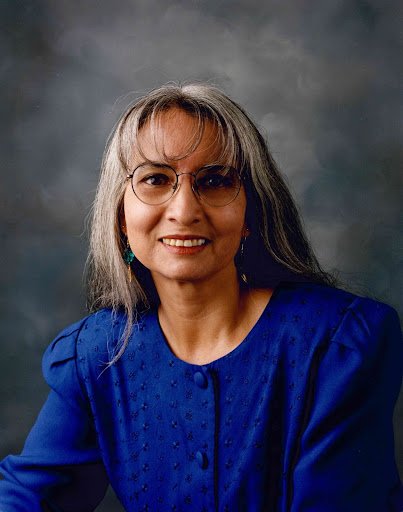
A few days ago, the communities of danzantes & ceremonial circles throughout the Southwest were heartbroken & saddened to hear of the sudden passing of one of our beloved elders and capitana de la danza for Grupo Yolloincuauhtli, Alida Earthfeather Montiel. The community is mourning the loss of such a beautiful, compassionate and resilient being.
I was honored to have been introduced to ceremonies at the guidance of Earthy (among many others) that has woven together the foundation for my community/ceremonial and healing work over the past 25 years. The first time I entered the temazcal/sweat lodge was a sunrise ceremony with Earthy & Socorro Bernasconi when I was only 16 years old in Guadalupe, Az. That was just the beginning!
At 18, I found myself at Arizona State University working on my undergraduate degree and reconnected with Earthy again after I heard the drum and ayayotes in the basement of the memorial union. As women on the red road, we would pray together in tipi, sweat and in the danza over the next 20+ years.
Years would go by and Earthy was always so kind, welcoming and always open to sharing with community. I am fortunate to have been honored to have the opportunity to drum, share songs and dance with Earthy throughout the years.
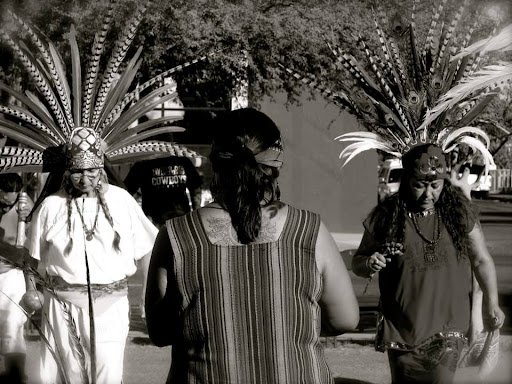
Pictured: Left- Earthy, Center- Carmen and Right - Benita (Two amazing cihuame & temachtiani to so many on earth. They are now both now in the spirit world.)
Many years later, the Cihuapactli Collective invited Earthy to share about her work in community, reviving coming of age ceremonies and the much needed support for urban Indigenous women around birth & healing.


She was always so supportive of the work of the Cihuapactli Collective, we will truly miss her and the medicina she shared with so many. Our deepest condolences to her family and the family of danzantes, her loss is definitely felt.
Tlazocamati ~ Gracias ~ Thank you, Earthy for the years of activism and prayer. May your spirit soar with the ancestors. Ometeotl
Rest as Resistance: Reconnecting with the Elements The 6th Annual Ancestral Womb Wellness Gathering
This year we celebrated our 6th Annual Ancestral Womb Wellness Gathering in South Phoenix. Our theme was Rest as Resistance: Reconnecting with the Elements. After year’s of growing and working in our community, we realized just how important rest is in our day to day lives. Not just to recharge, but simply to be and support us in our healing as indigenous peoples.

Thank you to Denise Amaya, the artist who created our beautiful image to represent our rest theme this year.
Although our gatherings are focused on Black, Indigenous and LGBTQ voices and experiences, this year we made the intention to open our space up for cis-men and those outside of the BIPOC experience. This idea had a lot to do with how cis-men in our families and our allies and extended community have supported the collective work. In addition, we’ve recognized that cis-men in particular, are in great need of a space for their healing as well. Although things were not centered around their experience, we decided to welcome them to our forward facing space so they could listen and learn in hopes for them to connect and create their own space for healing.
Another thing we intentionally carved space for, is a message regarding the use of the word womb in our gathering name.

As we prepared for the gathering and focused on the theme of rest, we found it appropriate to focus on the elements: water, air, earth and fire. The elements always help ground us in the work we do, and they are present in every which way. Our first day was focused on water and we learned of how to support ourselves in self-care to rest. The second day was focused on air and we heard stories about loss and release and learned of the importance of community care. The third day was focused on earth and we came together in community to sync our bodies with our mind and spirits through drumming, song, and dance. And the fourth day, which was actually our 7 year anniversary Gala, we focused on fire and the ways in which this collective has grown and will continue to grow as we tend to our fires.
Community came together each day to hold space for themselves and each other. We created pods with mats and a few chairs around so people could gather in small groups. At each pod, we had the elements present with lit candles, beautiful wooden decor and medicine they could place over the fire to help center themselves as they listened to each speaker.
Our presenters provided a wealth of knowledge for community to learn from and apply in their own lives. We brought together Black Indigenous voices to speak on how vital rest is in our every day lives.


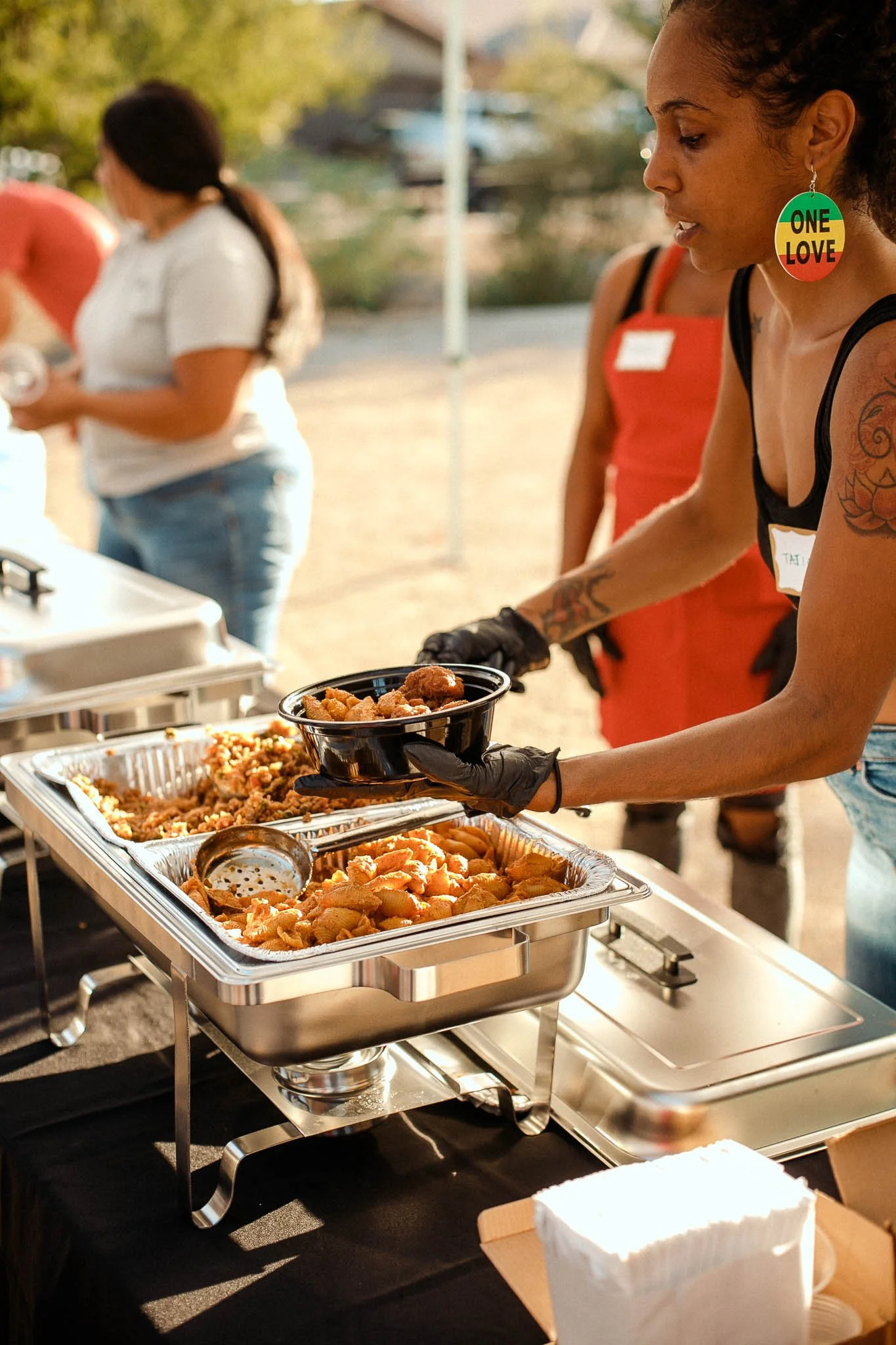


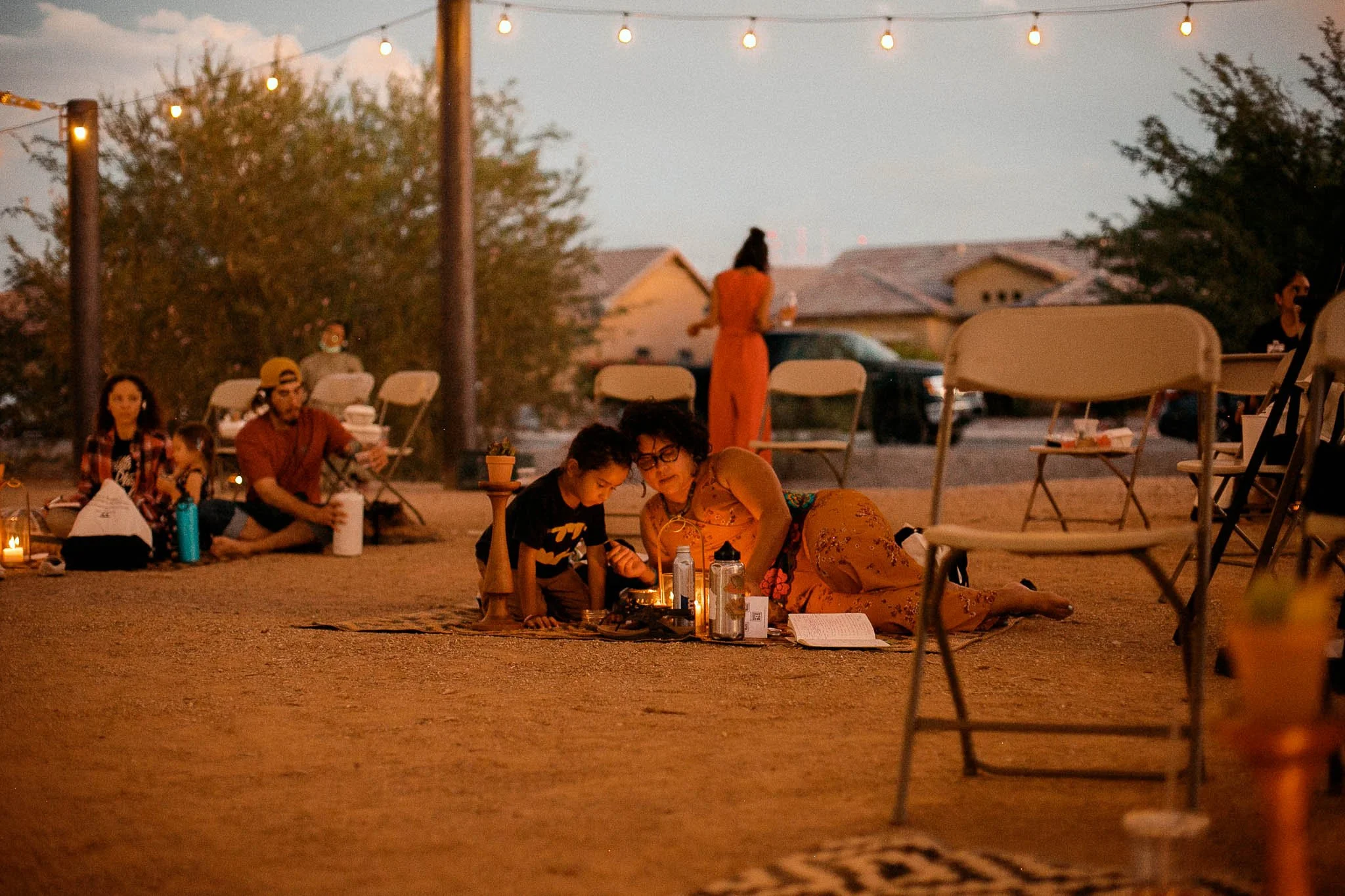


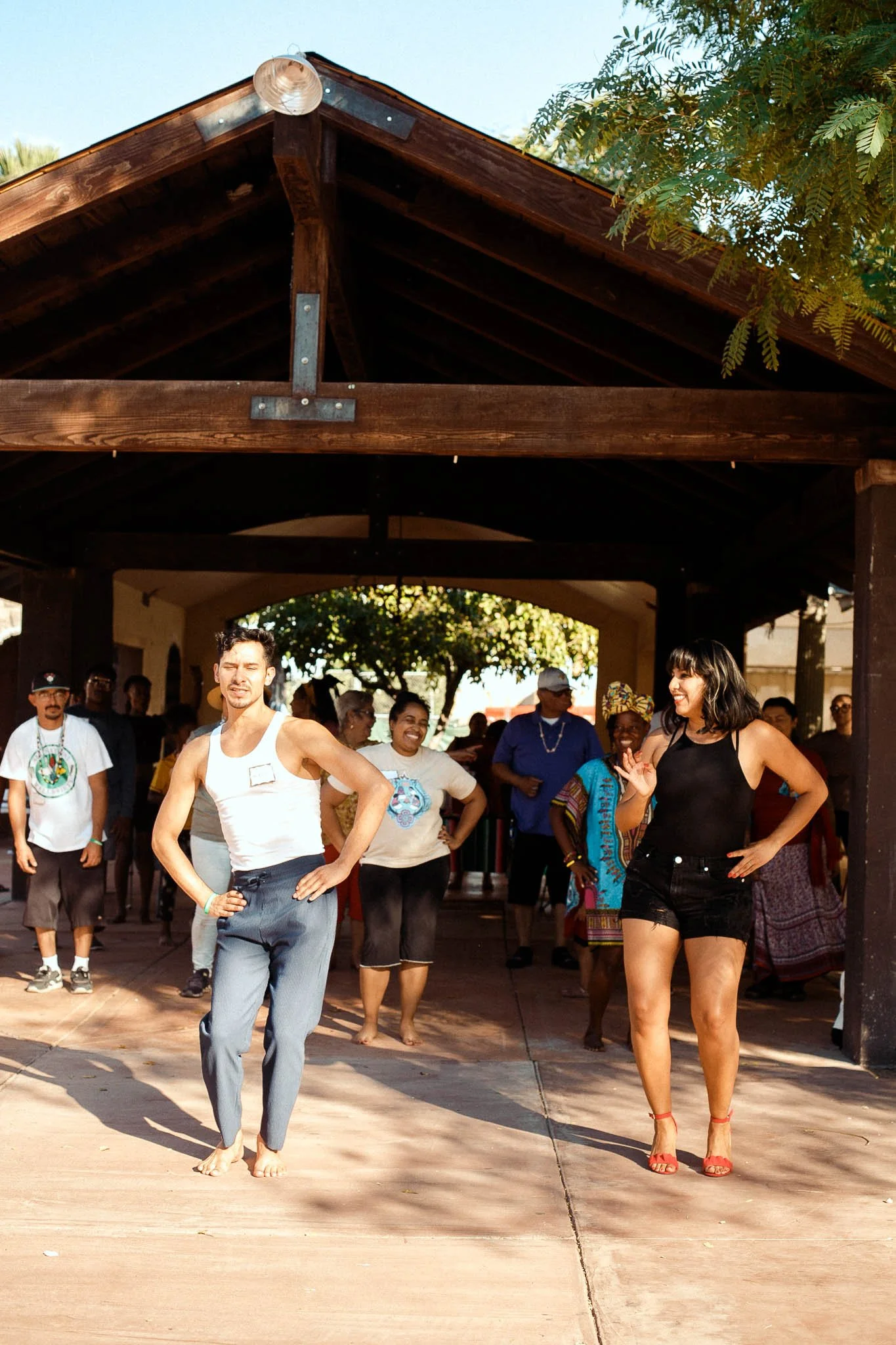


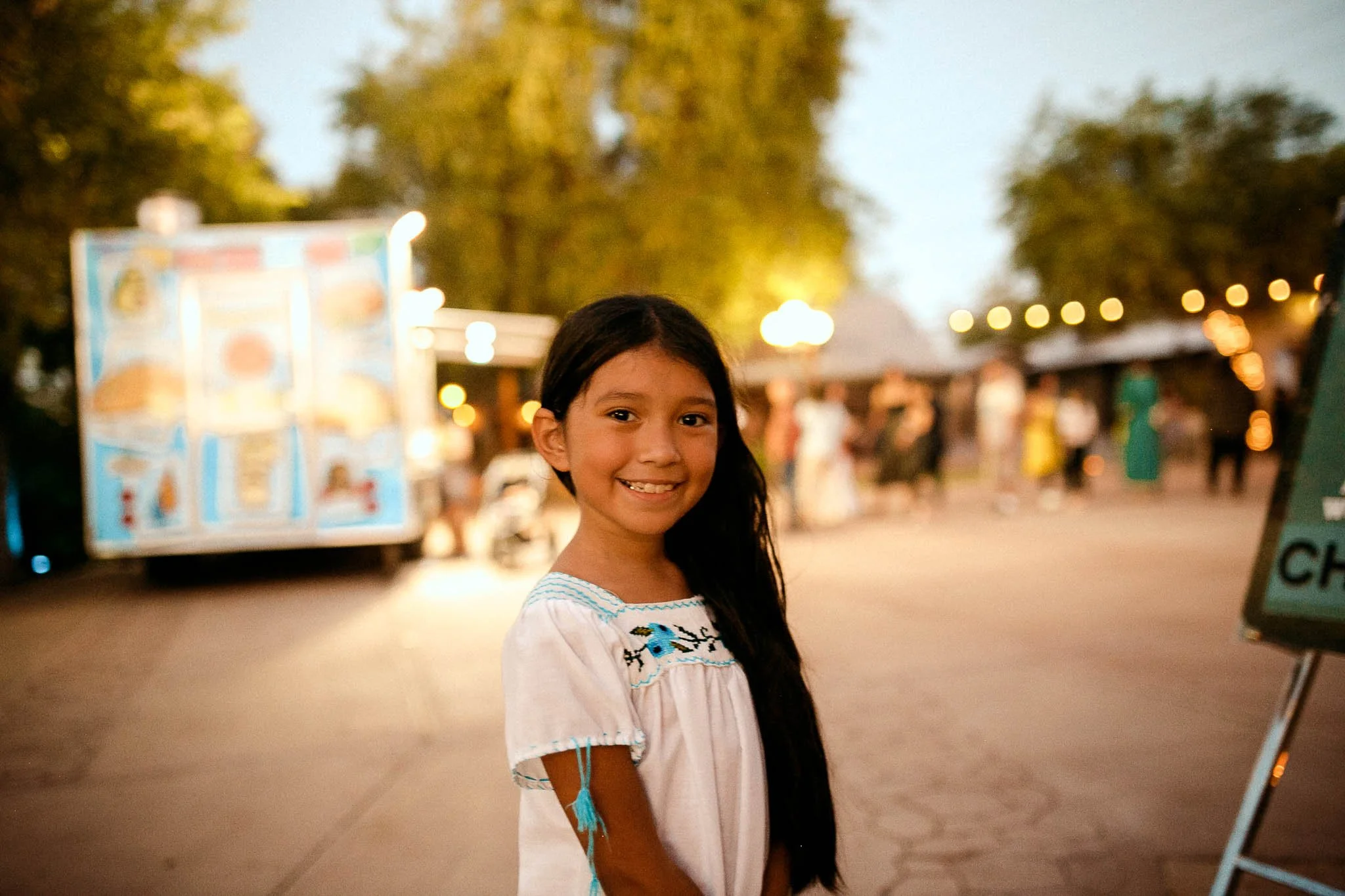


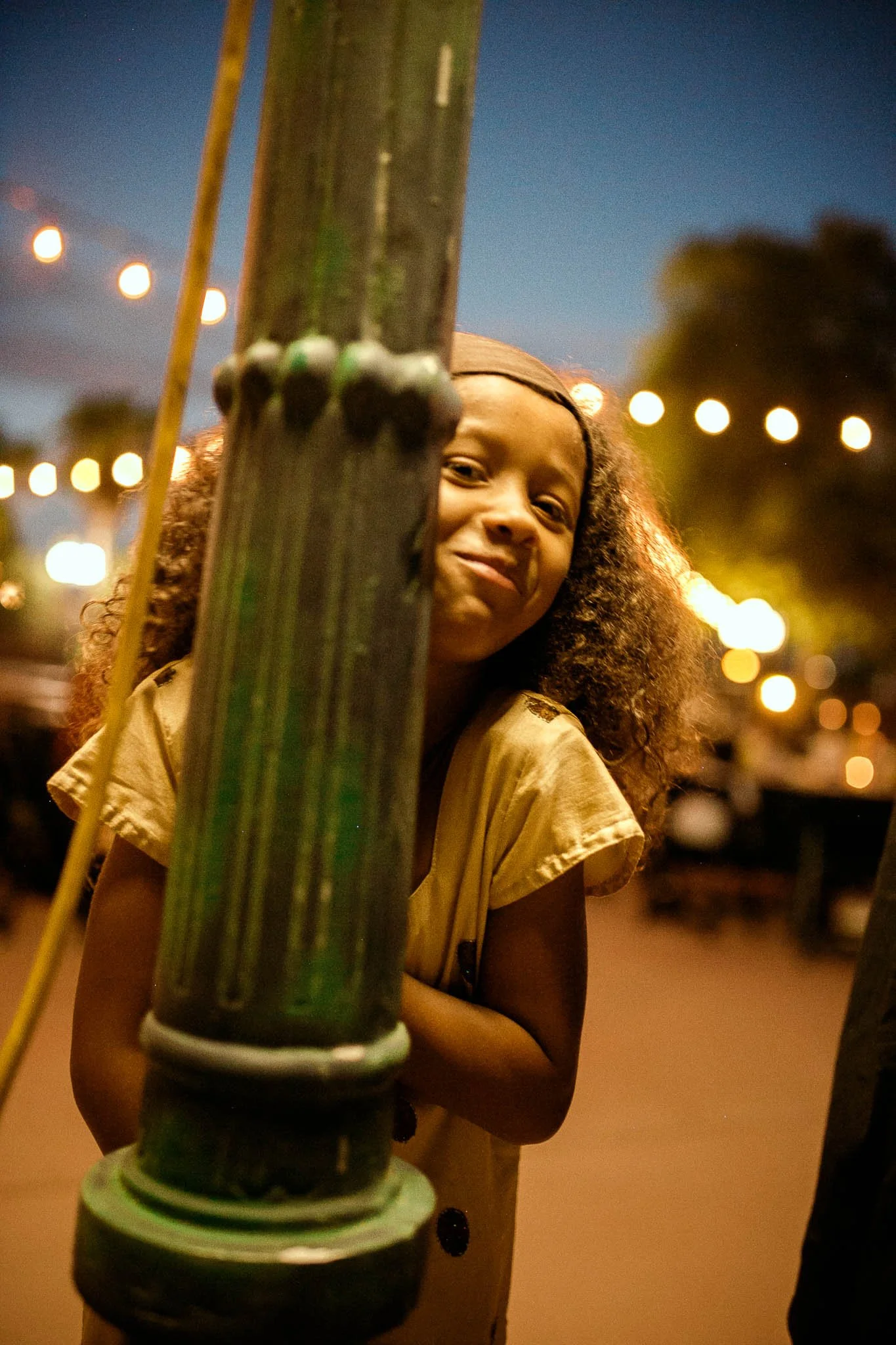
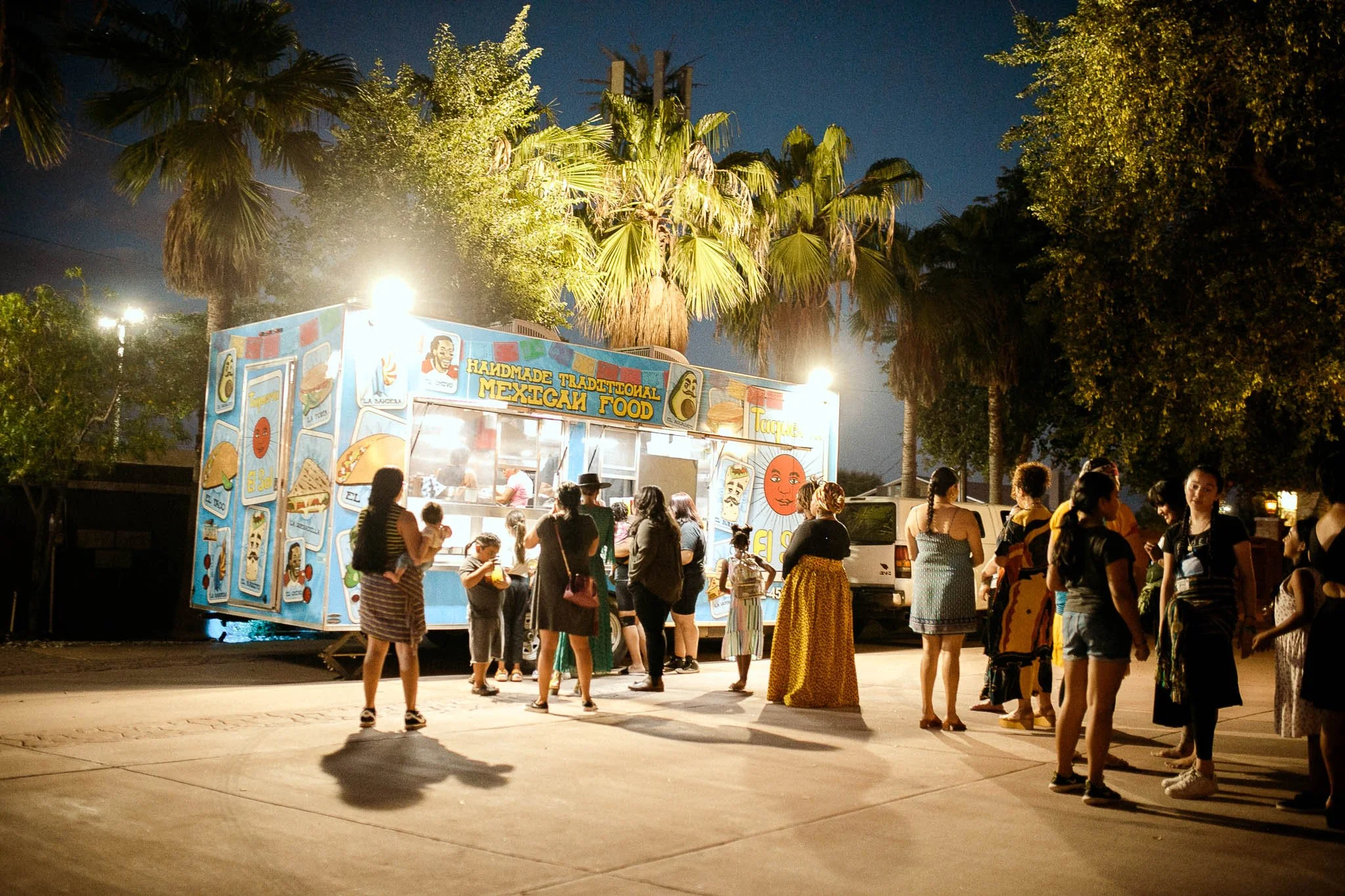


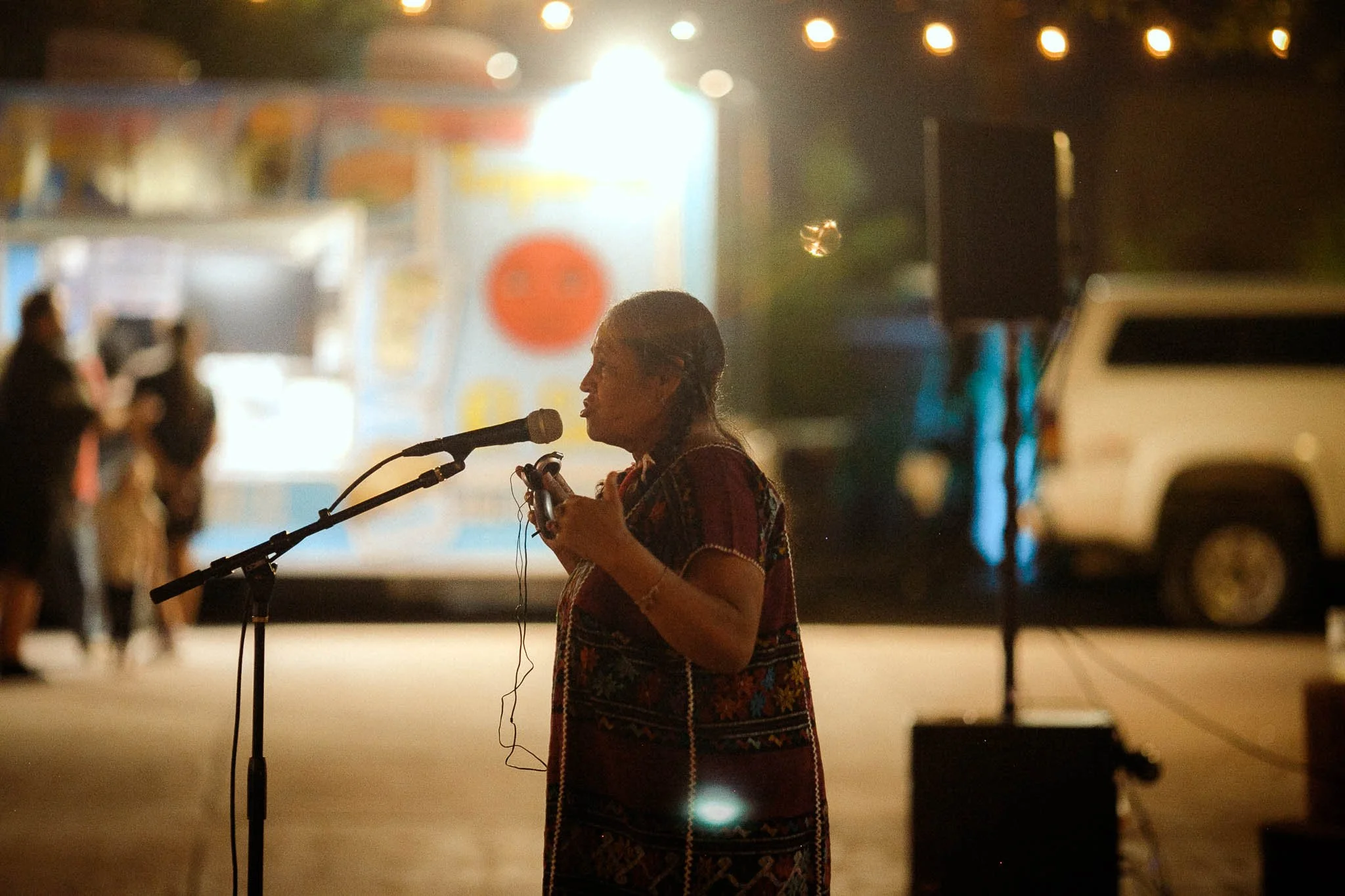


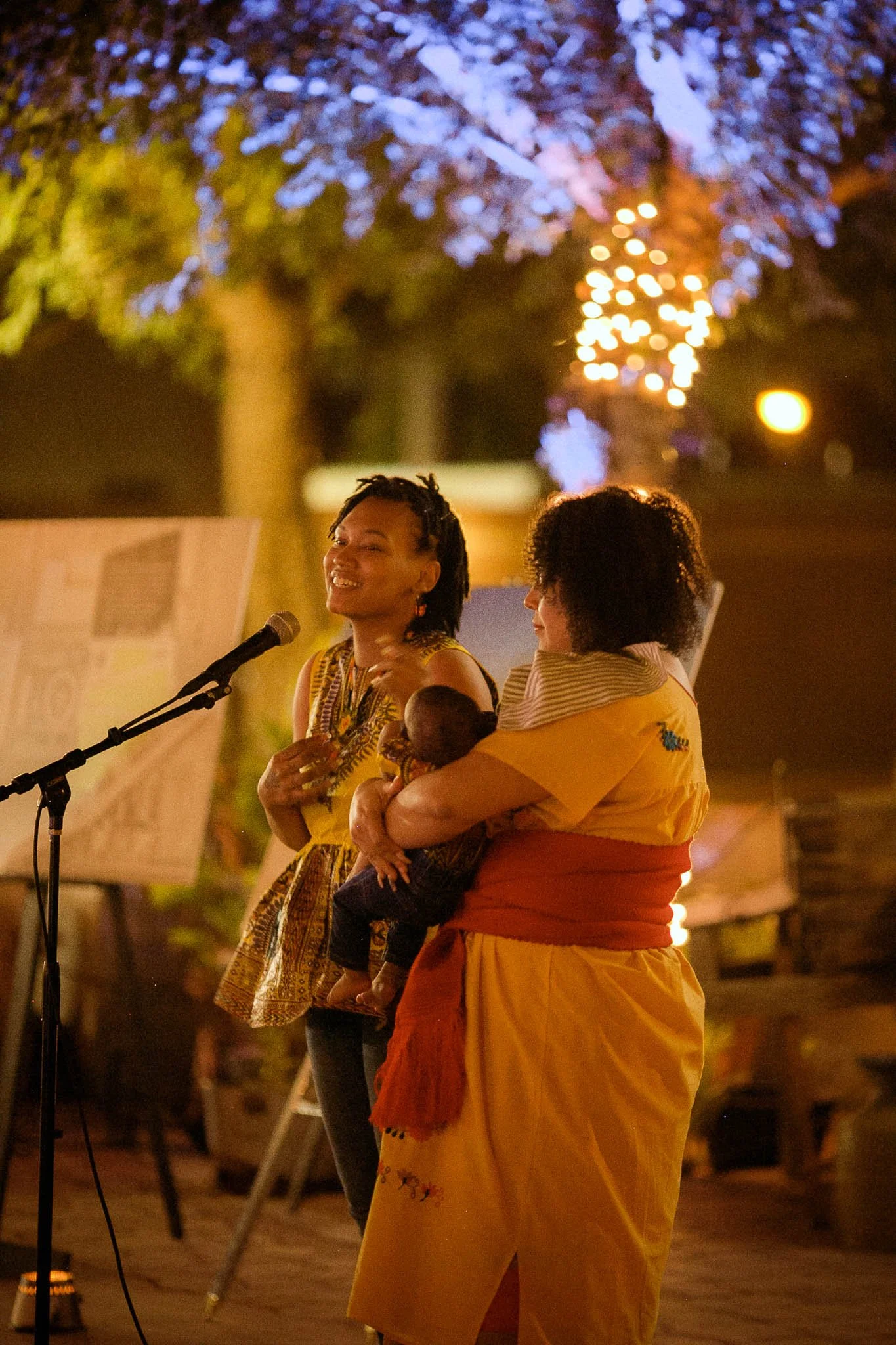

We have many thanks to give for this sacred gathering. Thank you to our volunteers for all the help throughout these full four days. Thank you to our translators for your support in making sure language justice is a part of every experience we hold space for. Thank you to Phil our DJ for providing music and a sound system, a first for us. Thank you to our presenters for your time and the wealth of knowledge you provided. Thank you to our healers and those who tended to our altars to support the spiritual wellbeing of our community. Thank you to all the behind the scenes staff who helped unload, set up, clean up and pack up at the end of the night. Thank you to our staff who supported the event by filling in gaps and being an extra set of hands. Thank you to our childcare team for taking care of our children so lovingly and mindfully. Thank you to the collective comadres for showing up and supporting in whatever was needed. Thank you our Azkame/Co-directors for conceptualizing and planning this 6th annual Ancestral Womb Wellness Gathering! Tlazocamati!

2021 Miccailhuitl Dia de Muertos
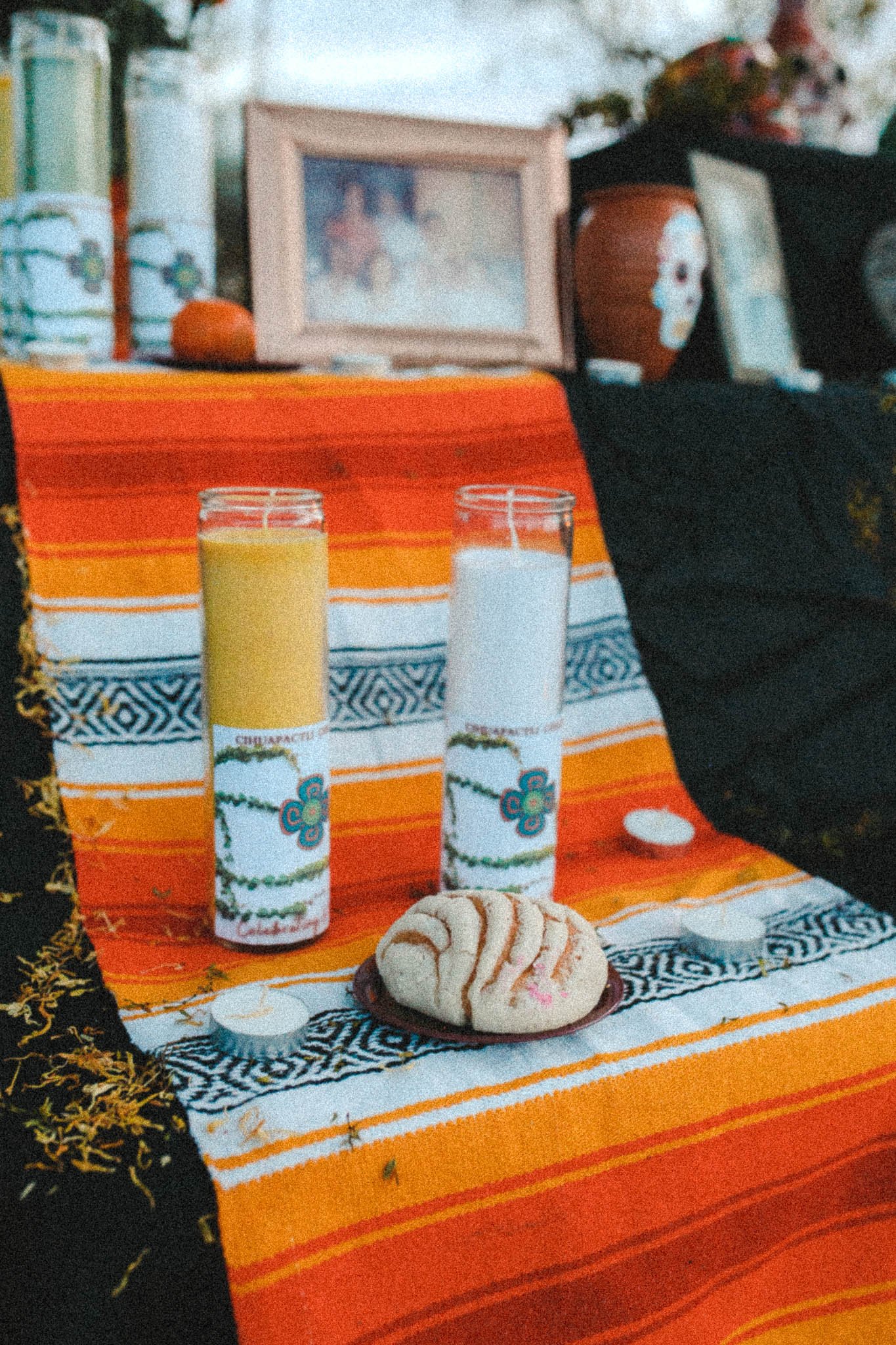
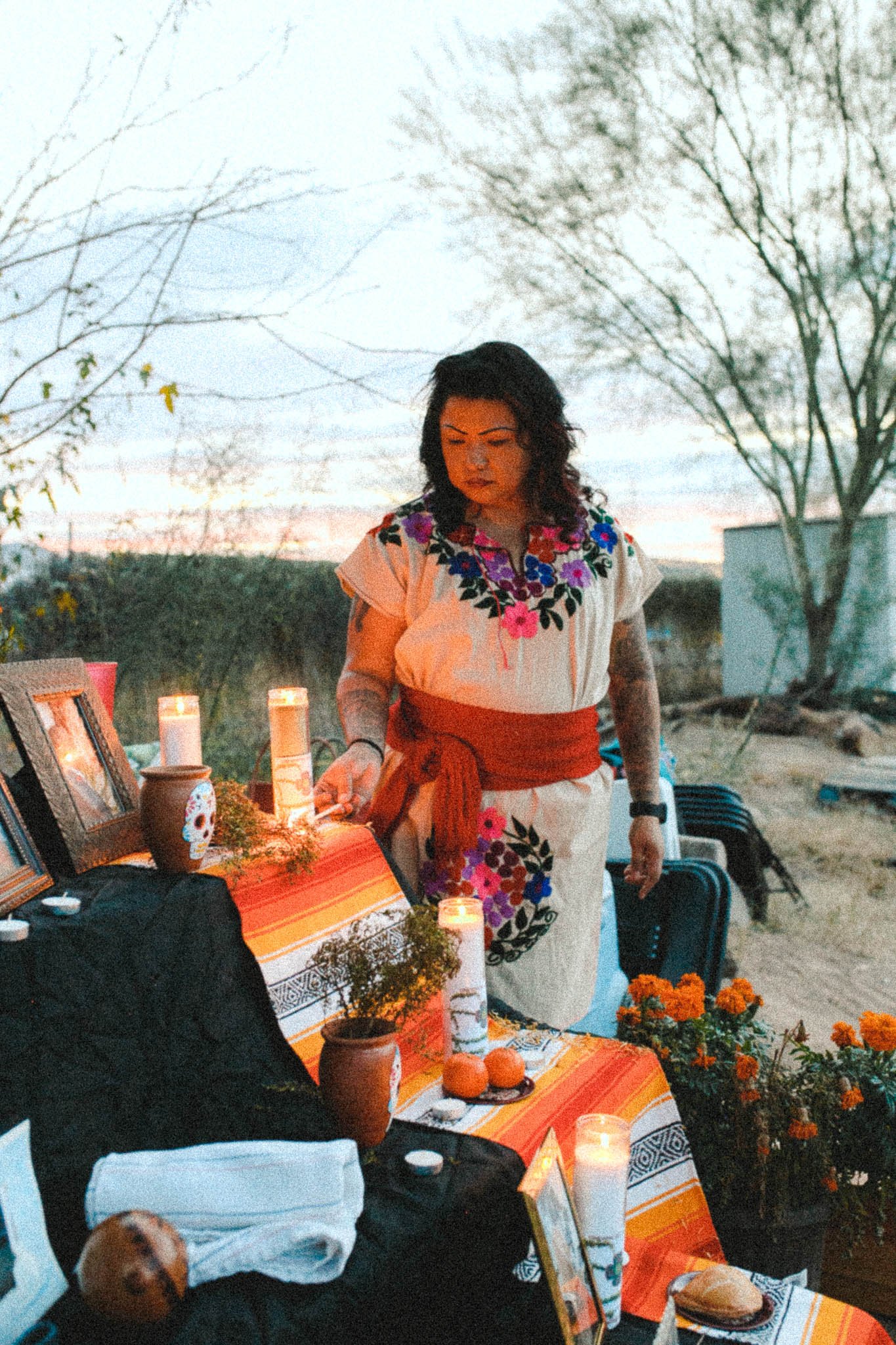
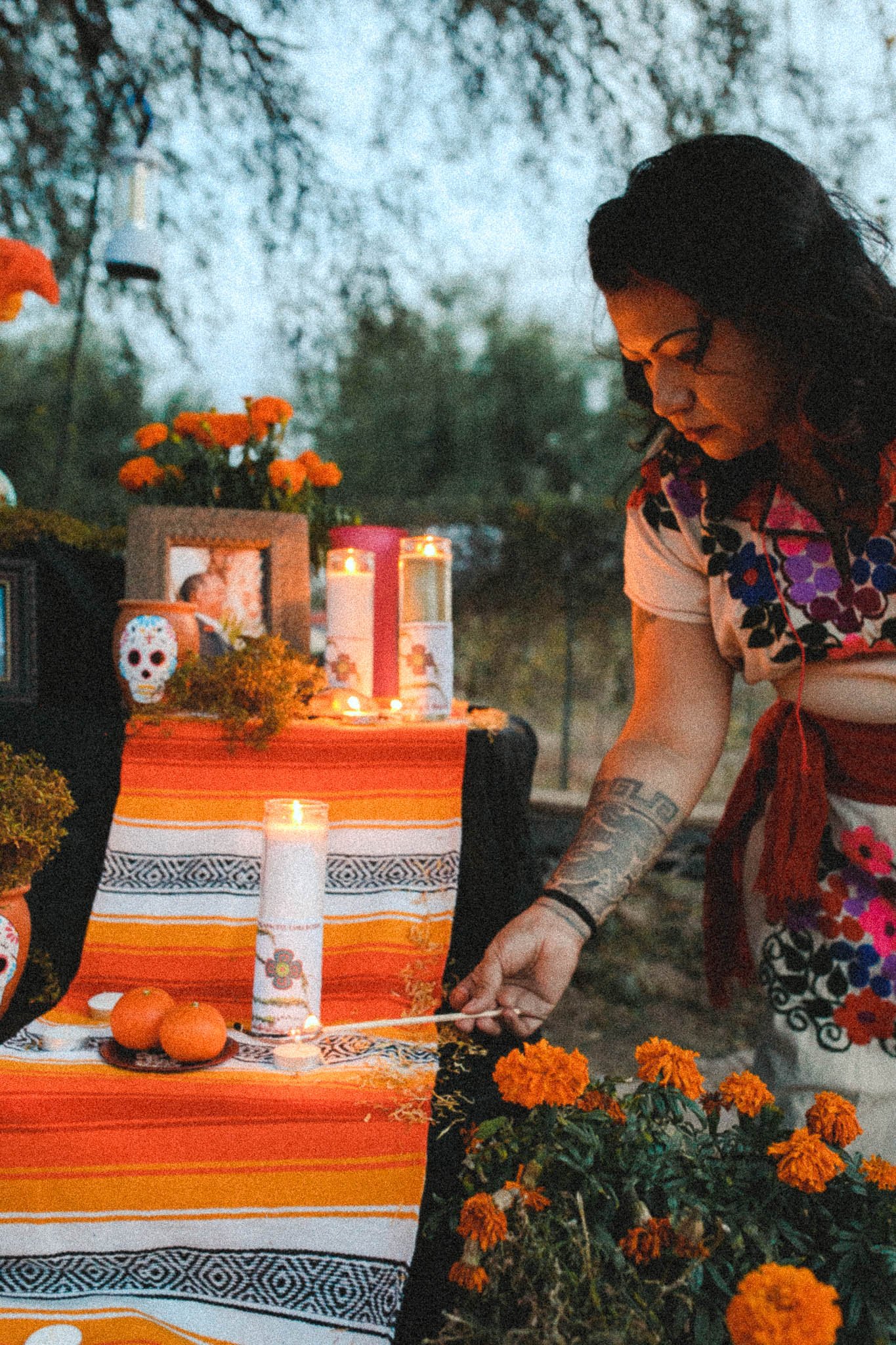
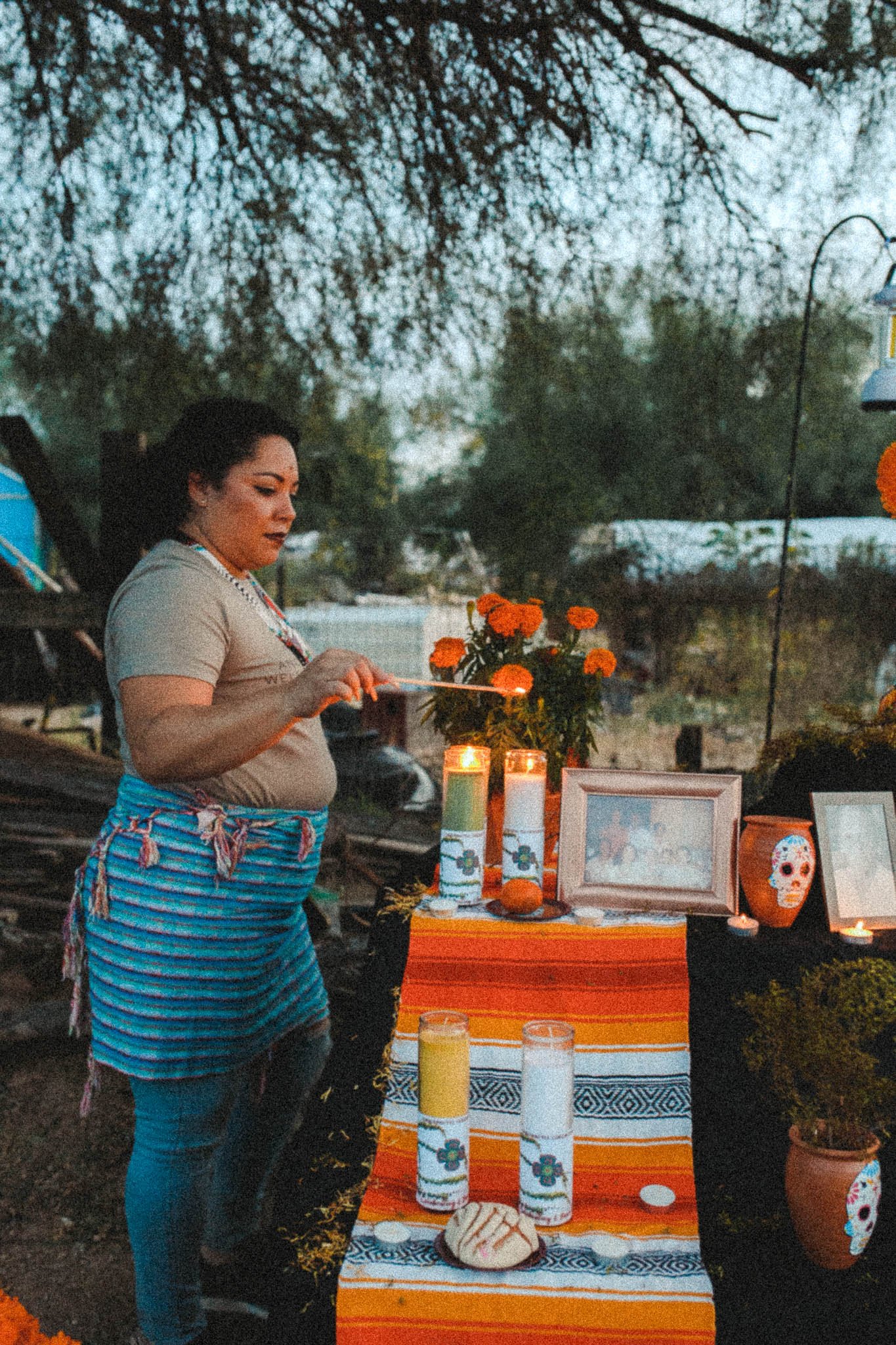
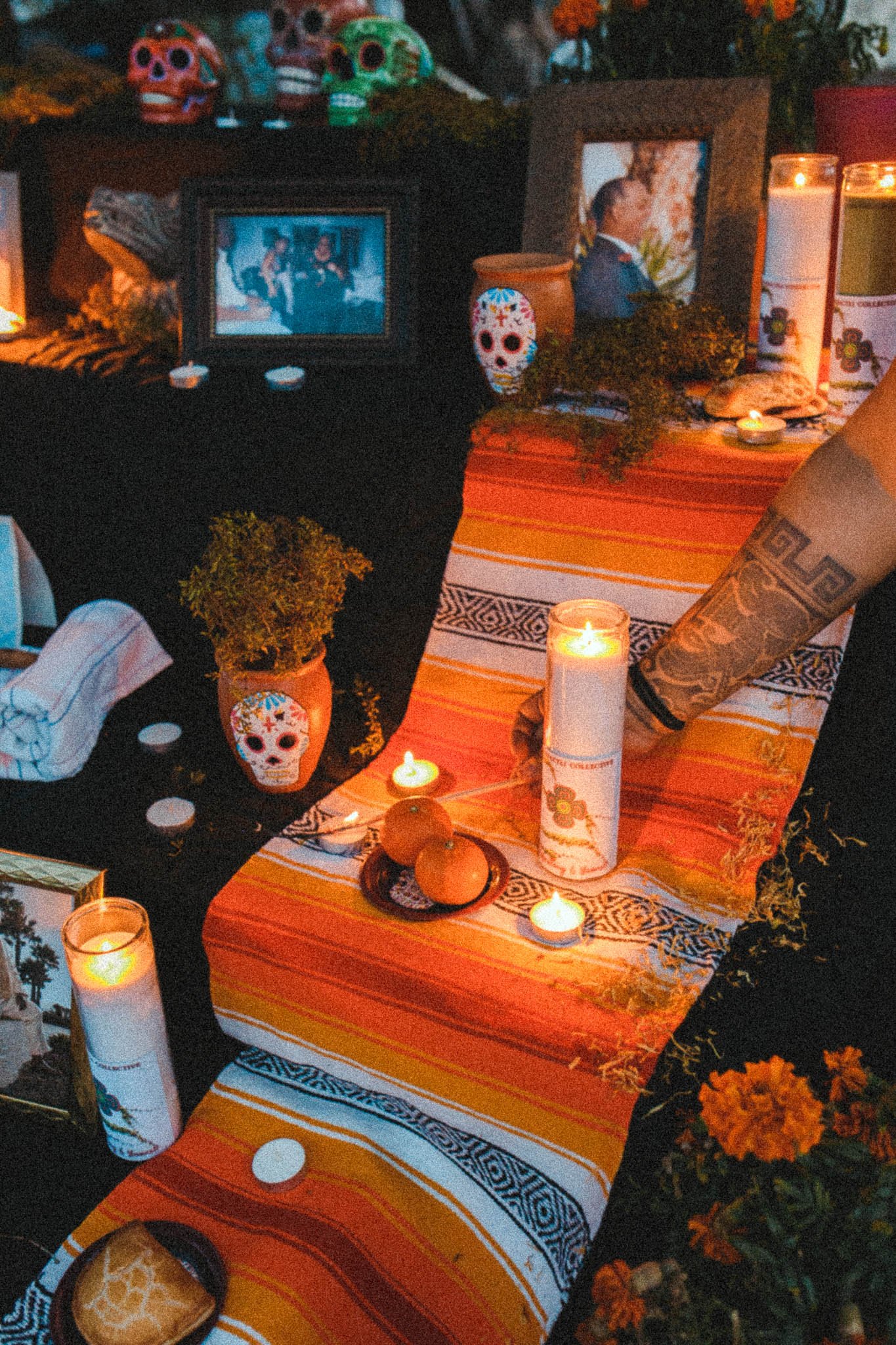
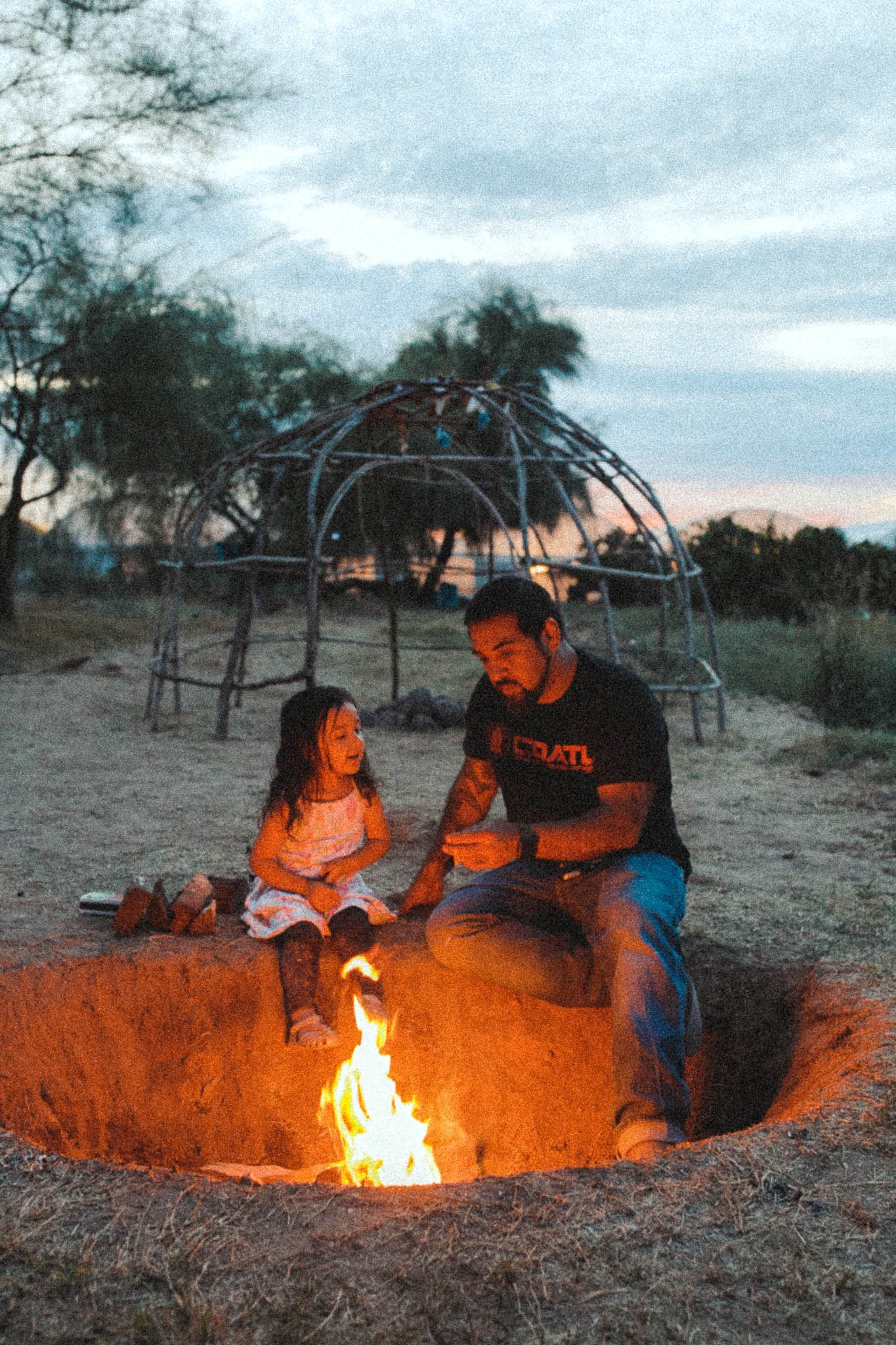
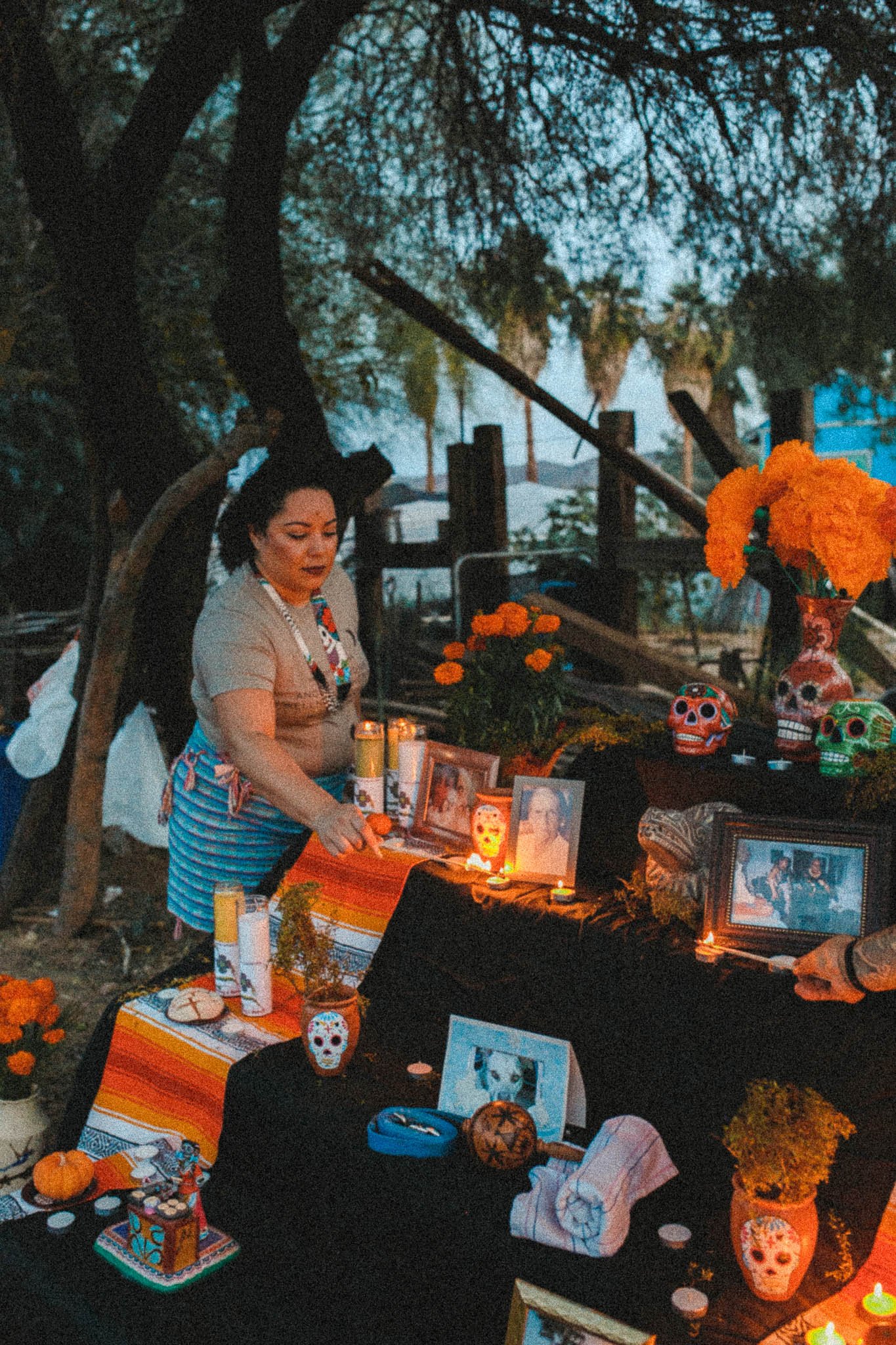
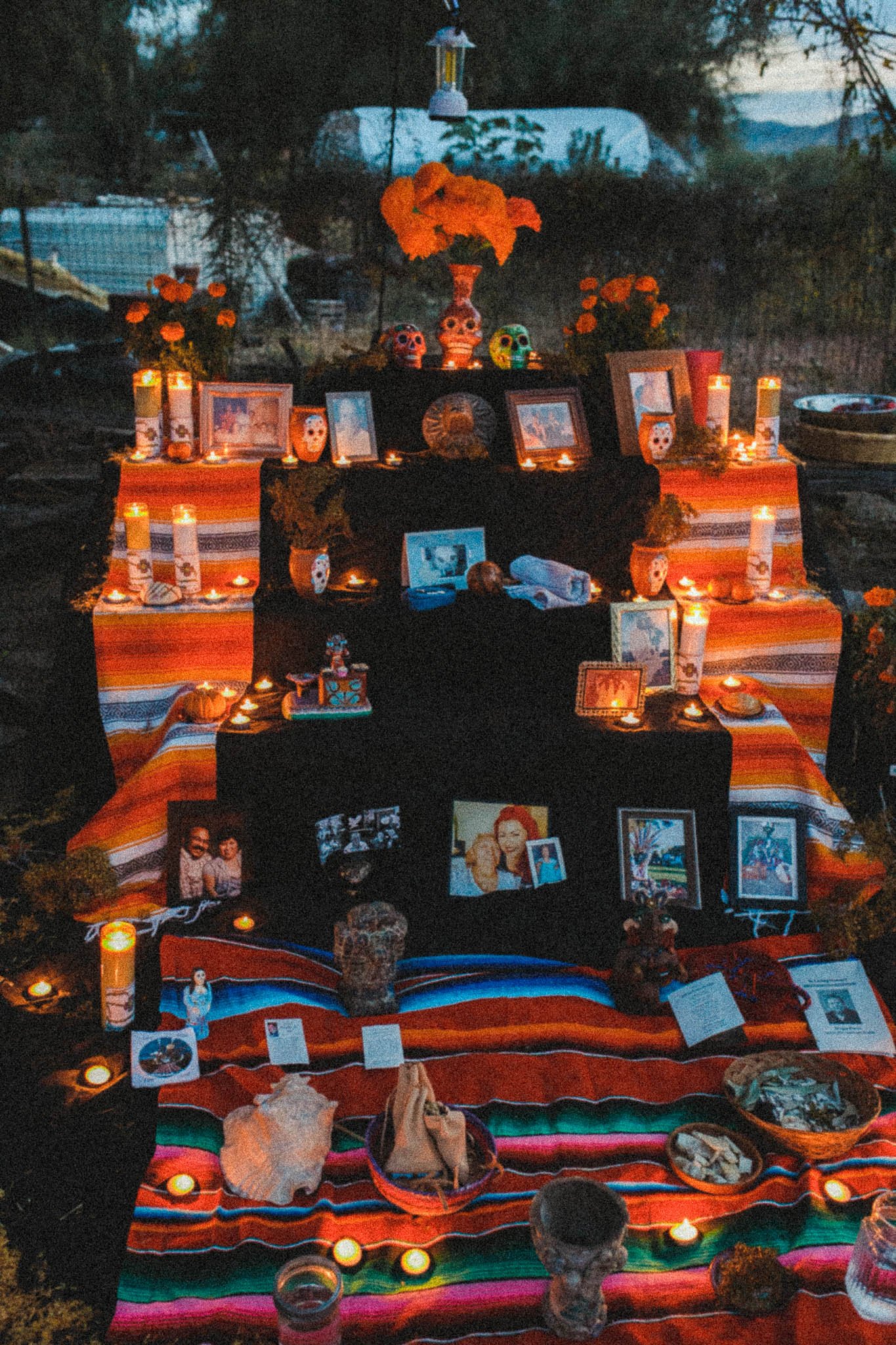
On November 1st we held a Miccailhuitl or Dia de Muertos gathering at The Orchard with comadritas and family members of the collective. We held space for each other and our passed loved ones on a beautiful altar put together by the azkahtl, the aunties who coordinated the event. We sang songs and laid down prayers by the fire and shared comforting foods like pan dulce, corn mush and a lemongrass lavender tea. Intimate and warm.



6 Year Anniversary
October 13th we celebrated our 6 year anniversary at Spaces of Opportunity in South Phoenix. It was a while since we’d seen many faces from our collective together so to be in an intimate (Covid mindful) space together felt comforting. It brought us back to our beginning days when we’d gather to be in comadrismo with one another. We danced under the stars and saw our children run and play after breaking open a piñata in celebration of these years growing together.

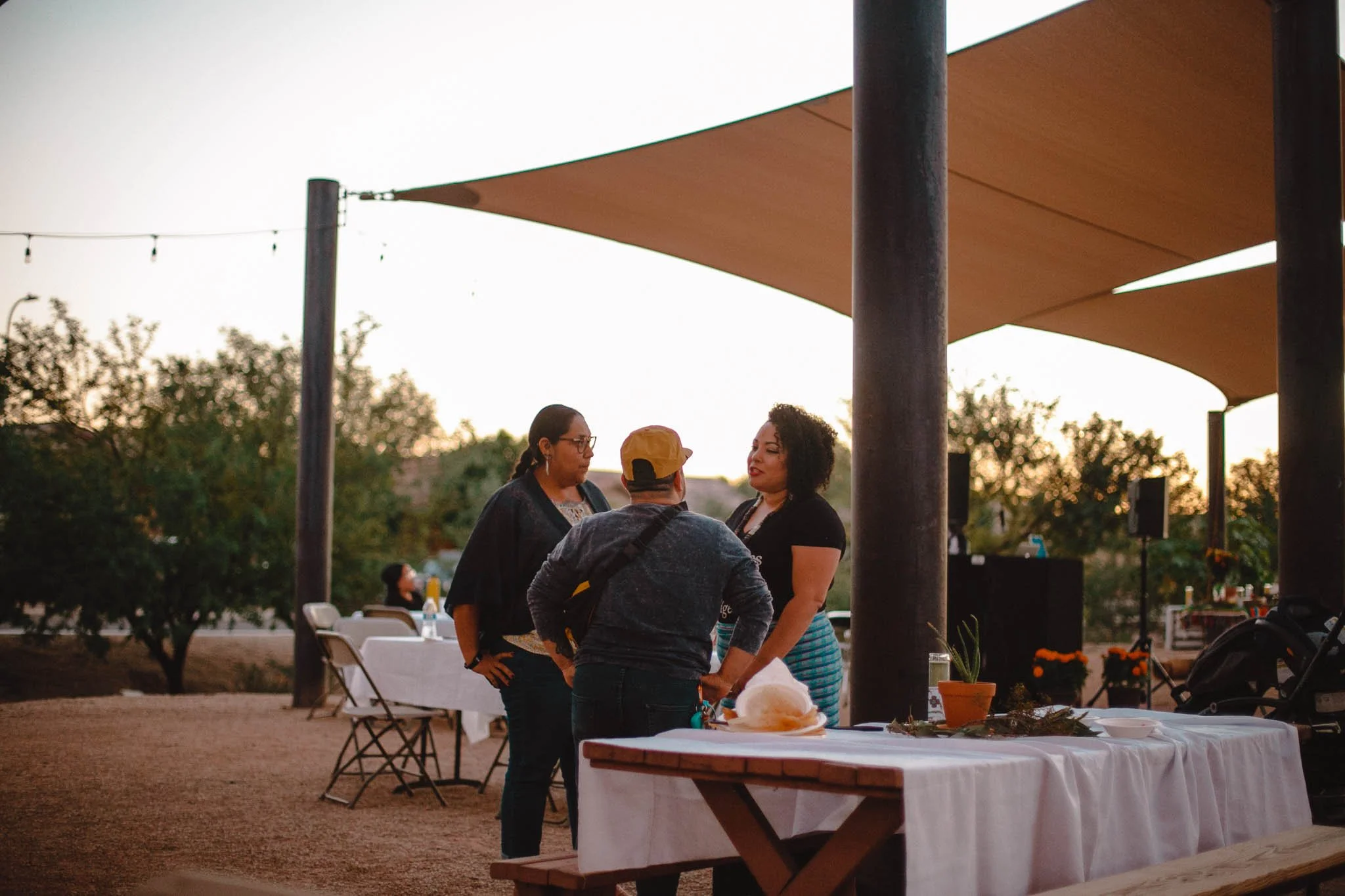


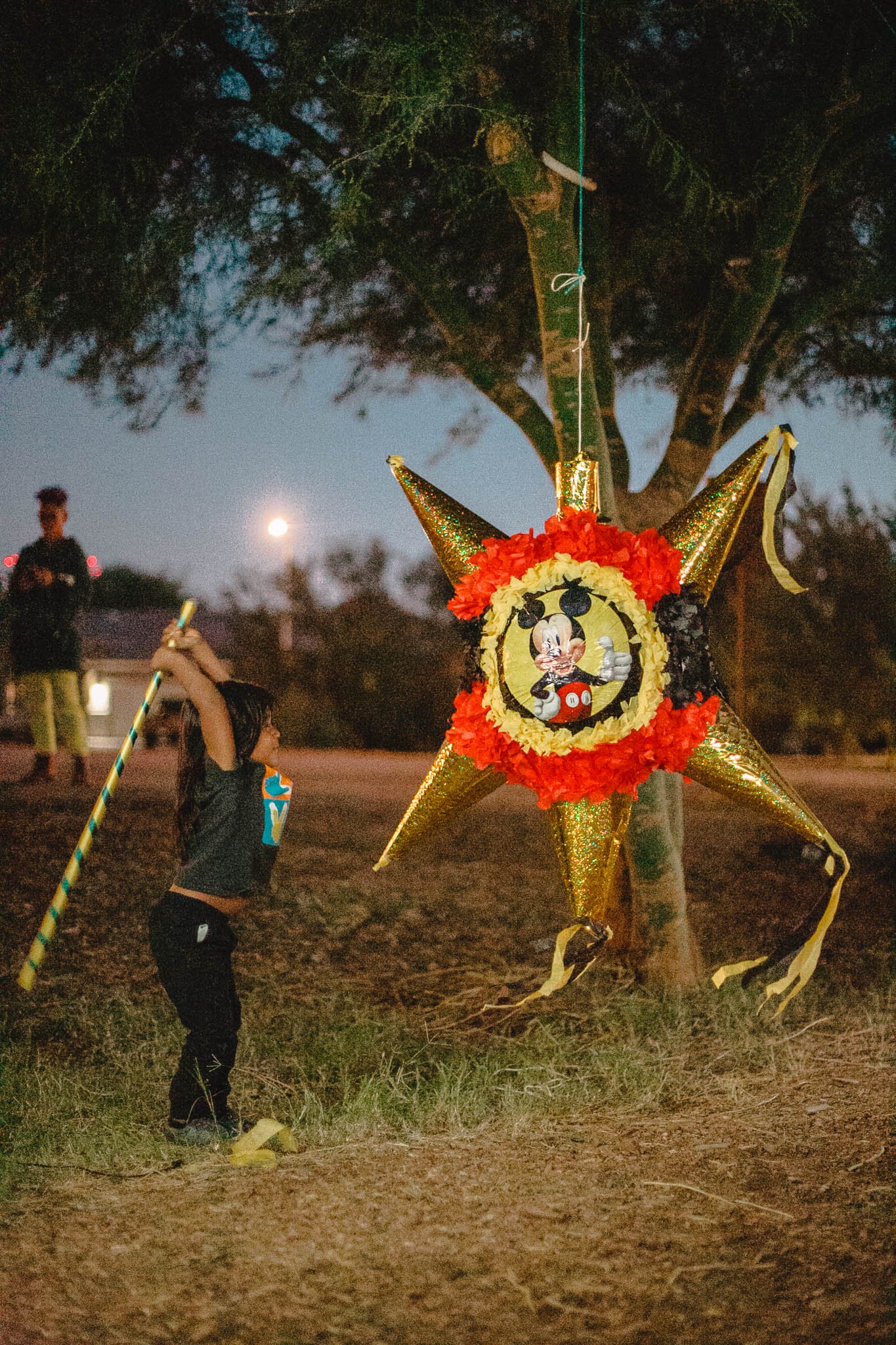
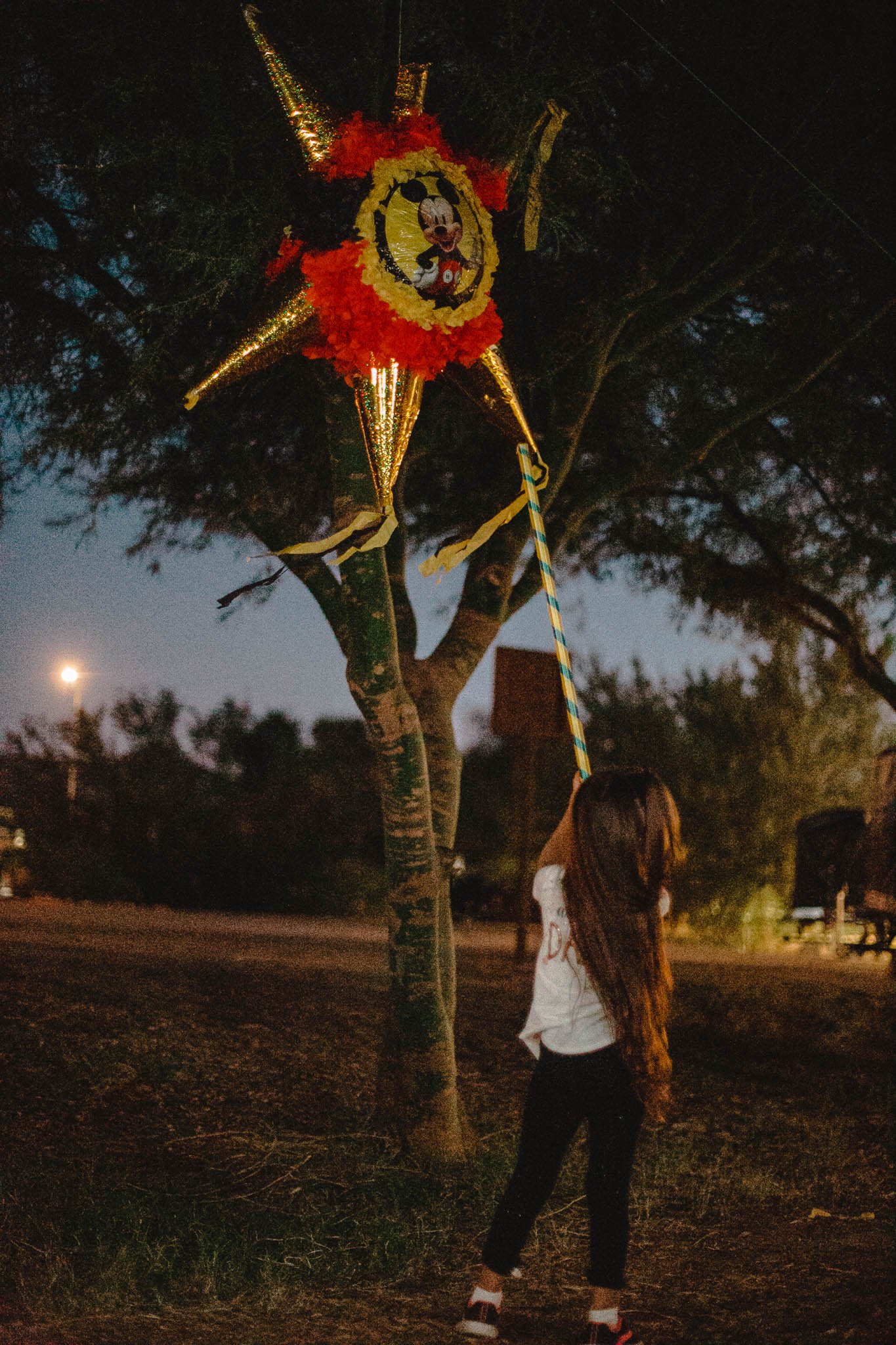
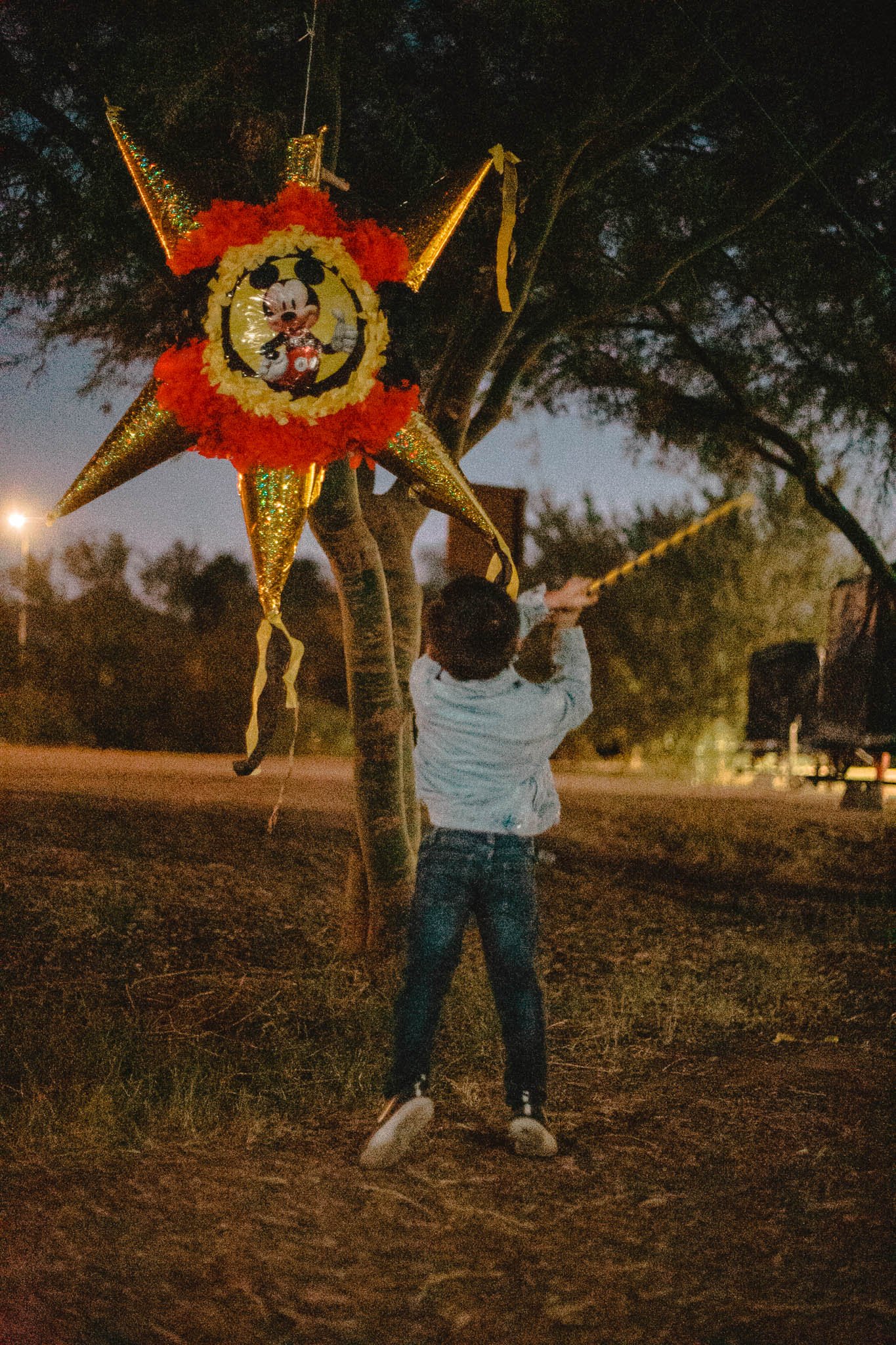
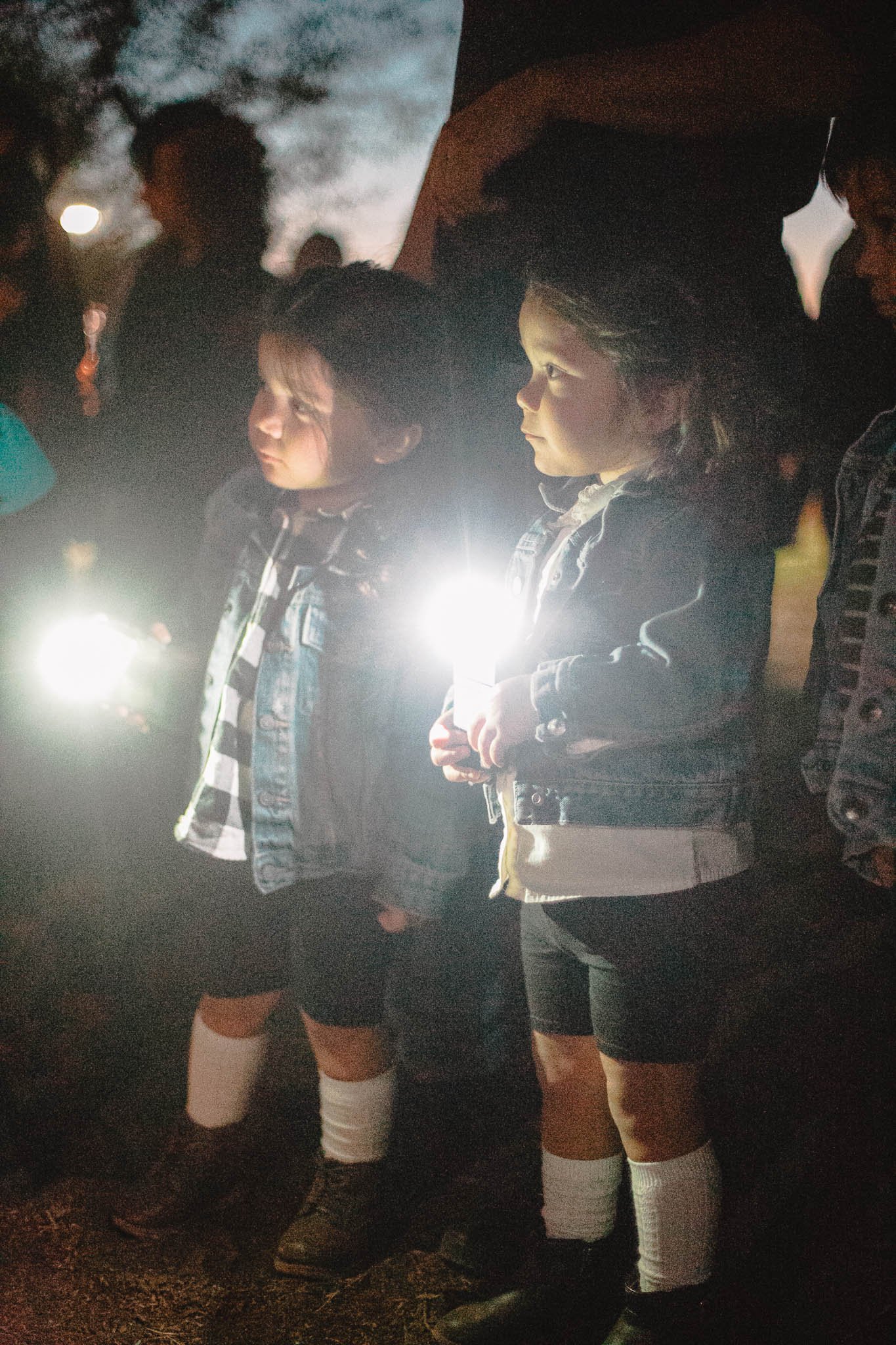


Such an enlightening evening with everyone. Thank you for being a part of our community. If you have any photos or video from the event you would like to share with us so we can add to our archives, we would greatly appreciate it. You can send them over at cihuapactlicollective@gmail.com. Tlazocamati!